

Field Study of
Economics Department
経済学科のフィールドスタディ
2025 Report on the Field Study A in Hawai’i
Report from Professor : Makiko Omura
2025 Field Study A “Environmental Issues in Hawai’i”
“Our 11th Field Study in Hawai’i ”
This academic year, the field study A (FSA) was conducted in the fall semester for the first time. February in Hawai‘i is part of the rainy season, and on the day before our return we experienced, for the first time, a flash flood and flood warning advising people to avoid going out.
This time, many parts of the program were implemented jointly with Konan University, and several activities were also conducted together with Kanagawa University. As only nine students from our university participated this year, the joint implementation—similar to last year—allowed us to offer a variety of lectures and site visits, which was particularly valuable.
Perhaps because many students participated individually rather than with friends, there was some initial awkwardness in their interactions. However, they quickly became comfortable with one another and began engaging enthusiastically in the various activities. Seeing this as a chaperoning faculty member was gratifying. Last year’s program had an extremely busy schedule from morning until evening with virtually no days off. This year, reflecting the feedback received, the program was designed with a more relaxed schedule, which allowed students to spend more time going out together and interacting with one another—something that seemed very beneficial.
Hawai‘i has a traditional concept known as Ahupua‘a, which refers to the sustainable management of land and resources extending from the mountains to the sea. This year, for the first time, we participated in an activity in which groups constructed an Ahupua‘a in a sandbox. While the concept can be understood to some extent through lectures and site visits, having the opportunity to engage in such hands-on activities provided a much deeper understanding of the concept, making it a highly meaningful experience.
In addition, the lectures and explanations provided by professors from the University of Hawai‘i and by volunteers during site visits were delivered with great clarity and skill. There must have been many sessions that were truly eye-opening for the students.
This year’s English course also included instruction focused on the student presentations given on the final day. Each student delivered a seven-minute presentation in English. Incorporating what they had learned locally into the topics they had worked on in Case Study A, the students further developed their research, resulting in impressive presentations by all. Congratulations!
This was the fourth field study since the University of Hawai‘i began organizing the program and arranging the logistics based on the previous FSA programs. Once again, we are deeply grateful to everyone at the University of Hawai‘i, including Spencer, Ms. Eiko, Professor Tarui, Professor Ulla, and the administrative staff, for their generous support.
Finally, I would like to commend the students for their efforts and express my sincere gratitude to everyone who contributed to the success of this field study, including Ms. Miura from our university staff who provided valuable assistance.
PHOTOレポート
-
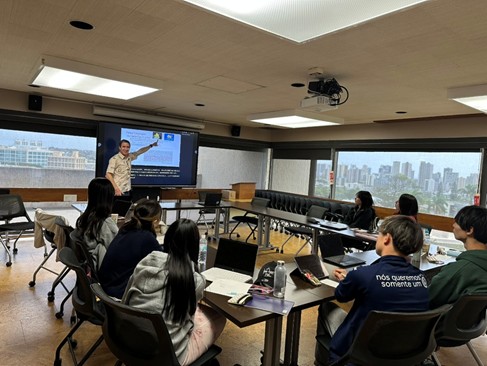
A class on the economics of fishery management -
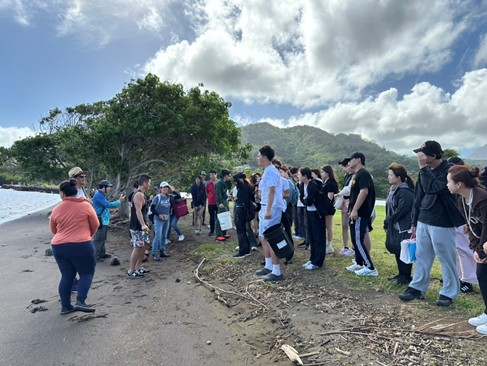
Briefing on the making of Ahupua’a at a traditional Hawai`ian fish pond -
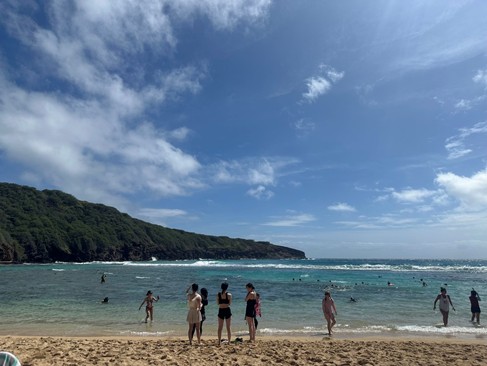
A seminar and field visit to the Hanauma Bay -
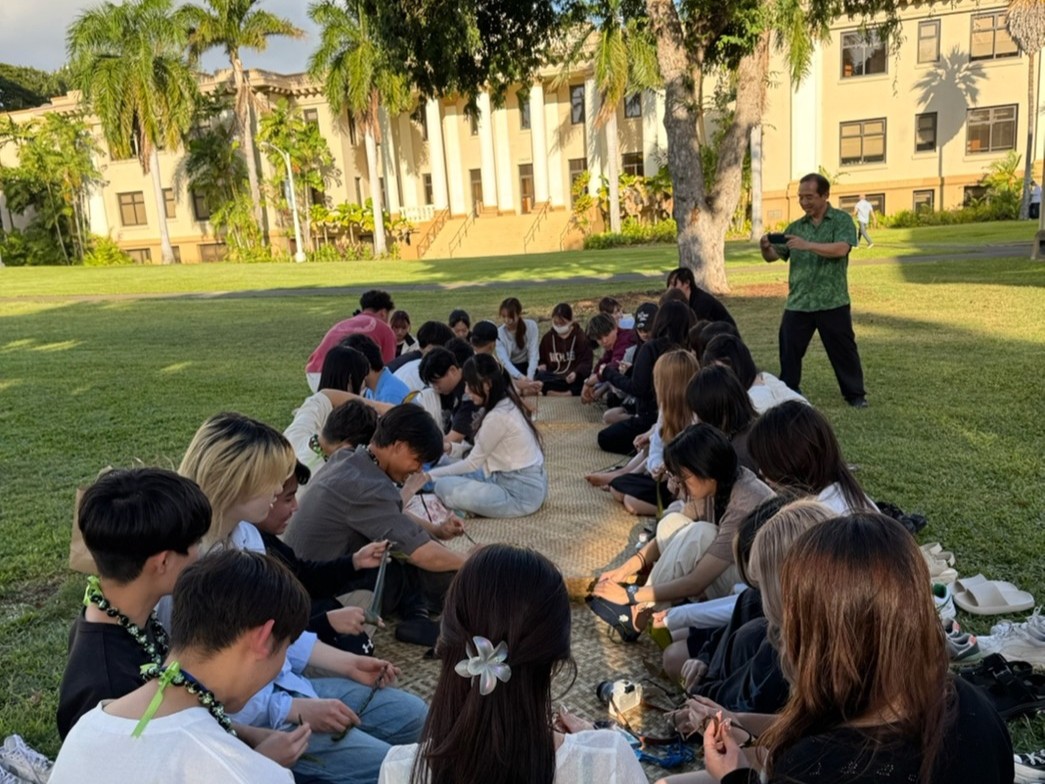
Traditional Lei Making -
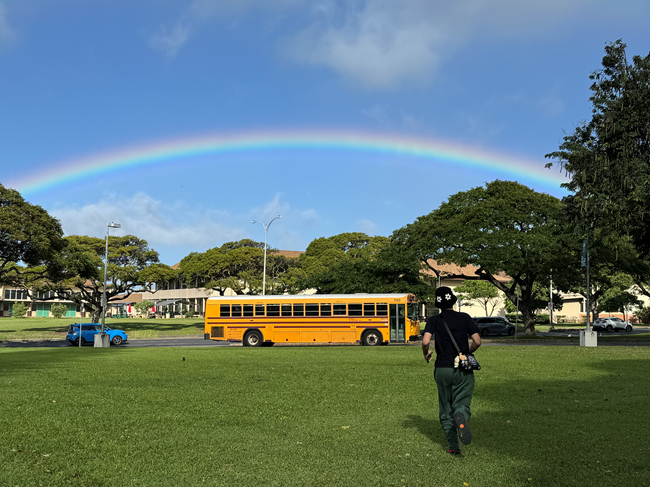
A Hawaiian rainbow and the school bus used for site visit